4th of July Cake: Best Festive Recipe to Bake
Have you ever considered how many home bakers attempt a patriotic baked dessert each summer, only to end up with muddy purple layers instead of the vivid red, white, and blue they imagined? The 4th of July cake is one of those recipes that looks intimidating but is genuinely achievable at home when you understand the right techniques from the start. This striking, layered baked dessert has become a staple of Independence Day celebrations across the country, and for good reason — it delivers not just visual drama but a deeply satisfying vanilla flavor that pairs beautifully with creamy white buttercream and fresh summer berries.
Table of Contents
Ingredients
For this 4th of July cake, you will need the following:
For the Cake Layers:
- 3 cups all-purpose flour
- 1 tablespoon baking powder
- 1/2 teaspoon salt
- 1 cup unsalted butter, softened
- 2 cups granulated sugar
- 5 large eggs, room temperature
- 1 tablespoon pure vanilla extract
- 1 cup whole milk (or buttermilk for extra tenderness)
- Red gel food coloring
- Blue gel food coloring
For the White Buttercream:
- 1 and 1/2 cups unsalted butter, softened
- 5 cups powdered sugar, sifted
- 3 to 4 tablespoons heavy cream
- 1 and 1/2 teaspoons vanilla extract
- Pinch of salt
For Decoration:
- Fresh strawberries, halved
- Fresh blueberries
- White star-shaped sprinkles or edible stars
- 1 or 2 small decorative American flag picks
Timing
This 4th of July cake requires the following time commitment:
- Preparation time: 35 minutes
- Baking time: 25 to 30 minutes per set of layers
- Cooling time: 1 hour
- Decorating time: 40 to 50 minutes
- Total time: approximately 2 hours 45 minutes to 3 hours
Step-by-Step Instructions
Step 1: Prep Your Pans and Mix the Base Batter
Preheat your oven to 350°F (175°C). Grease three 8-inch round cake pans, line each with a parchment circle, and lightly flour the sides. In a medium bowl, whisk together the flour, baking powder, and salt. In a stand mixer or large bowl, beat the softened butter and granulated sugar on medium-high speed for 4 to 5 minutes until the mixture is pale, fluffy, and noticeably increased in volume. Add the eggs one at a time, mixing thoroughly after each addition, then blend in the vanilla. With the mixer on low, add the flour mixture in three additions, alternating with the milk, beginning and ending with flour. Stop mixing as soon as the batter comes together to protect that soft crumb.
Step 2: Color the Layers and Bake
Divide the batter evenly into three separate bowls using a kitchen scale for precision. Leave one portion plain (this will be your white layer), tint the second a deep, vivid red using red gel food coloring, and tint the third a rich royal blue using blue gel coloring. Pour each colored batter into its prepared pan, smooth the tops, and bake for 25 to 30 minutes, or until a toothpick inserted in the center comes out with a few moist crumbs. Let the layers cool in their pans for 10 minutes before transferring to a wire rack to cool completely.
Step 3: Make the White Buttercream
Beat the softened butter on medium-high speed for 3 minutes until very pale and creamy. Gradually add the sifted powdered sugar one cup at a time, mixing on low to avoid a sugar cloud, then increasing speed after each addition. Add the heavy cream one tablespoon at a time until you reach a light, spreadable consistency. Mix in the vanilla and a pinch of salt to balance the sweetness. The buttercream for this 4th of July cake should be bright white and fluffy — avoid over-softened butter or yellow-tinted butter, as both affect the final color of the frosting. If your buttercream looks slightly yellow, refrigerate it for 10 minutes and re-whip.
Step 4: Level, Stack, and Crumb Coat
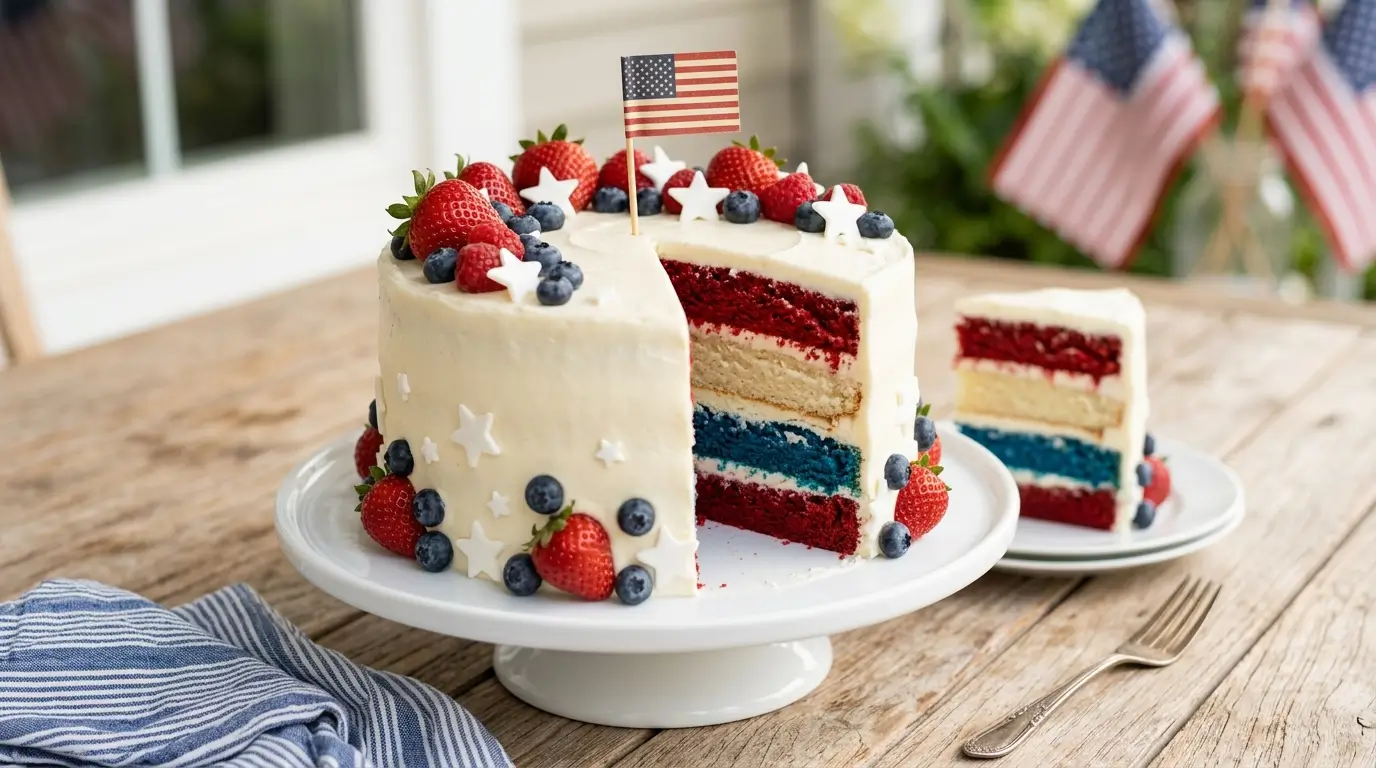
Once your layers are fully cooled, use a serrated knife or cake leveler to trim any domed tops so each layer sits perfectly flat. Place the red layer on a cake board or serving plate and spread an even layer of buttercream over the top. Add the white layer next and repeat, then finish with the blue layer on top. Apply a thin crumb coat — a very thin layer of frosting over the entire exterior of the 4th of July cake — to seal in any loose crumbs. Refrigerate for 20 to 25 minutes until the crumb coat is firm to the touch.
Step 5: Frost, Decorate, and Serve
Apply the final coat of white buttercream generously over the chilled 4th of July cake using an offset spatula and a bench scraper for smooth sides. Work in long, even strokes for a clean, gallery-worthy finish, or use the back of a spoon for a more rustic swirled look. For decoration, arrange halved strawberries and fresh blueberries in a clustered pattern across the top of the cake to mimic the colors and feel of the American flag. Scatter white star sprinkles around the fruit and tuck one or two small flag picks near the center for a festive finishing touch that is instantly recognizable.
Nutritional Information
For a serving of this 4th of July cake (1 slice, based on 12 servings):
- Calories: 540 kcal
- Total Fat: 28g
- Saturated Fat: 17g
- Cholesterol: 120mg
- Sodium: 195mg
- Total Carbohydrates: 70g
- Dietary Fiber: 1g
- Total Sugars: 52g
- Protein: 6g
- Calcium: 90mg
- Iron: 1.8mg
As a celebratory baked dessert, this 4th of July cake is designed for special occasions. The fresh berry topping adds a small but meaningful dose of antioxidants and vitamin C, making each slice feel slightly more wholesome than a purely frosted cake.
Healthier Alternatives
Transform your 4th of July cake into a healthier version with these modifications:
- Reduce the Butter: Swap half the butter in the cake batter with unsweetened applesauce to cut saturated fat while retaining moisture.
- Use Whole Wheat Pastry Flour: Replace up to half the all-purpose flour with whole wheat pastry flour for added fiber without compromising the delicate texture.
- Lower-Sugar Buttercream: Blend half the powdered sugar with powdered coconut sugar for a more complex, caramel-like sweetness that requires less overall sugar to taste satisfying.
- Natural Food Coloring: Use freeze-dried strawberry powder for red and butterfly pea flower powder mixed with a touch of lemon juice for blue, eliminating artificial dyes entirely.
- Dairy-Free Version: Replace butter with vegan butter, whole milk with oat milk, and heavy cream with full-fat coconut cream for a fully plant-based 4th of July cake that still holds its structure beautifully.
Serving Suggestions
Elevate your 4th of July cake experience with these ideas:
- Serve each slice on a navy blue or white dessert plate and add a small sprig of fresh mint for a pop of color that ties the patriotic theme together.
- Pair slices with a scoop of vanilla bean ice cream or a dollop of freshly whipped cream to balance the sweetness of the buttercream.
- Offer a small pitcher of warm berry compote on the side — blend strawberries and blueberries with a touch of sugar and lemon juice — for guests who want to pour extra fruit flavor over their slice.
- For an outdoor cookout, pre-slice the cake and present individual slices in cupcake wrappers on a tiered stand for easy grab-and-go service.
Common Mistakes to Avoid
Master this 4th of July cake by avoiding these pitfalls:
- Using Liquid Food Coloring: Liquid dye is far less pigmented than gel and adds excess moisture to the batter, which can cause the layers to bake unevenly. Always use gel coloring for bold, true-to-life red and blue tones.
- Skipping the Crumb Coat: Applying the final frosting layer directly over an uncoated cake drags crumbs into the buttercream, creating a messy, speckled exterior. The crumb coat is a non-negotiable step for a clean finish.
- Not Cooling Completely: Even slightly warm layers will melt the buttercream and cause the cake to slide during assembly. Allow every layer at least one full hour of cooling time on a wire rack.
- Overmixing After Adding Flour: Once the dry ingredients go in, mix only until the batter is just combined. Overdeveloping the gluten leads to a dense, rubbery crumb instead of the tender layers this 4th of July cake is known for.
Storing Tips
Preserve the freshness of your 4th of July cake with these strategies:
- Room Temperature Storage: In a cool kitchen (below 70°F), store the frosted cake under a cake dome for up to 2 days. The fresh berry topping is best added the day of serving rather than in advance.
- Refrigerator Storage: Place the cake in an airtight container or cover with plastic wrap pressed gently against the frosting and refrigerate for up to 5 days. Remove slices 20 to 30 minutes before serving to allow the buttercream to soften back to its ideal, creamy texture.
- Freezing Unfrosted Layers: Wrap each cooled, unfrosted layer tightly in plastic wrap, then in aluminum foil, and freeze for up to 3 months. Thaw overnight in the refrigerator before assembling and decorating.
- Freezing Frosted Slices: Flash-freeze individual slices on a parchment-lined baking sheet for 1 hour, then transfer to freezer bags or an airtight container for up to 2 months.
Conclusion
The 4th of July cake is a vibrant, show-stopping baked dessert that brings together bold patriotic layers, silky white buttercream, and fresh summer berries into one unforgettable celebration centerpiece. With the right coloring technique, a proper crumb coat, and a little patience, anyone can pull off this stunning holiday bake at home. Try it this Independence Day and share your results in the review section below.
FAQs
Can I make the 4th of July cake layers in advance? Yes! Bake the layers up to 2 days ahead and store them tightly wrapped at room temperature, or freeze them for up to 3 months. Make the buttercream the day before as well, refrigerate it, and re-whip just before assembling.
Can I make this 4th of July cake as cupcakes instead? Absolutely. This batter yields approximately 24 cupcakes. Divide the colored batters into lined cupcake tins, filling each about two-thirds full. Bake at 350°F for 18 to 22 minutes. Pipe the white buttercream on top and finish with a blueberry, a strawberry half, and a small star sprinkle for individual patriotic treats.
Is this 4th of July cake suitable for beginners? Yes, with a careful read-through of the steps before starting.
Your Feedback Matters
There are no reviews yet. Be the first one to write one.