Mango Smoothie Bowl: Best Cold Breakfast Recipe
Is it possible that the most nourishing cold breakfast you could eat in the morning takes less time to prepare than it does to brew a cup of coffee? The mango smoothie bowl has been quietly taking over breakfast tables around the world, and once you try it, the reason becomes instantly clear. This glorious cold breakfast delivers a thick, creamy base made from frozen mango, topped with an abundance of colorful fruit, crunchy granola, and a drizzle of honey — all in under ten minutes.
Table of Contents
Ingredients
For this mango smoothie bowl, you will need the following ingredients:
For the Base:
- 2 cups frozen mango chunks
- 1/2 cup frozen banana slices (use ripe banana for natural sweetness)
- 1/3 cup coconut milk, full-fat (swap for almond milk for a lighter base)
- 1 tablespoon lime juice
For the Toppings:
- 1/2 fresh mango, sliced
- 1/2 kiwi, sliced into rounds
- 1/4 cup fresh blueberries
- 3 tablespoons granola
- 1 tablespoon shredded unsweetened coconut
- 1 teaspoon honey or agave (optional)
Timing
This mango smoothie bowl requires very little time investment:
- Preparation time: 5 minutes
- Blending time: 2 to 3 minutes
- Assembly time: 3 minutes
- Total time: approximately 10 to 12 minutes
Step-by-Step Instructions
Step 1: Freeze Your Ingredients in Advance
The secret to a truly thick mango smoothie bowl — one that holds its toppings without collapsing into a liquid puddle — is starting with properly frozen fruit. Make sure your mango chunks and banana slices have been in the freezer for at least 4 hours, ideally overnight. If you are using fresh mango, slice it up the night before and freeze it on a flat tray before transferring to a bag. This small step is what separates a spoonable, restaurant-quality mango smoothie bowl from a thin, disappointing liquid breakfast.
Step 2: Blend to a Thick, Creamy Base
Add the frozen mango, frozen banana, coconut milk, and lime juice to your blender. Start on low speed to break up the frozen fruit, then increase to high. Use your blender’s tamper if available — this keeps everything moving without the need to add extra liquid, which is the number one culprit behind a runny mango smoothie bowl. Blend only until smooth and creamy, pausing to scrape down the sides as needed. The final texture should be thick enough that a spoon dragged through it leaves a clean trail. Taste and adjust — if you want more brightness, add another squeeze of lime. If you want more sweetness, blend in a small drizzle of honey.
Step 3: Pour and Set the Base
Pour the blended base immediately into a wide, shallow bowl. Tilt the bowl slightly and use the back of a spoon to spread the mixture into an even, smooth layer. Work quickly because the frozen base begins to soften once it hits the bowl. This is also the moment to assess thickness — if your mango smoothie bowl base looks too pourable, return it to the blender with a few more frozen mango chunks and re-blend. A properly thick base makes all the difference in how the toppings sit and how the bowl looks in photos and at the table.
Step 4: Add Your Toppings with Intention
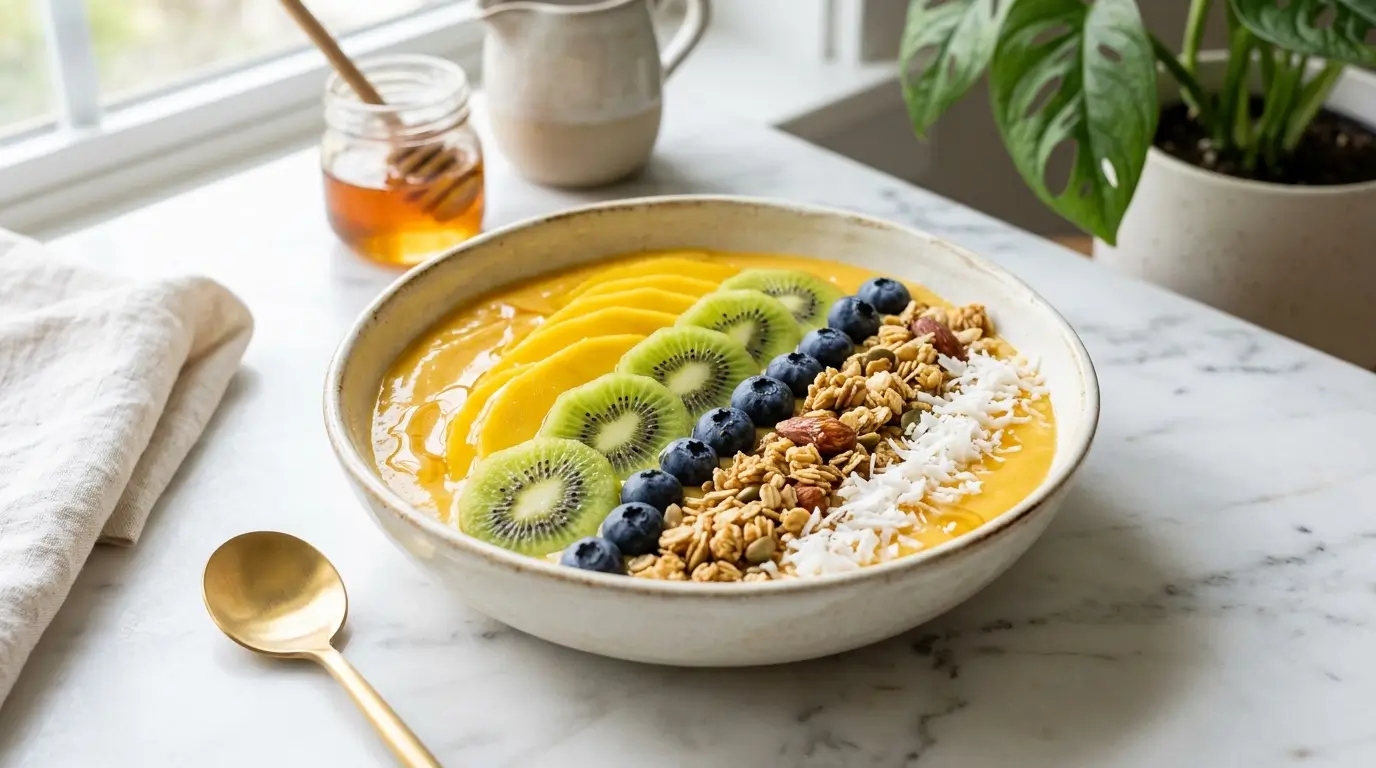
This is where the mango smoothie bowl transforms from a simple blended cold breakfast into something truly beautiful. Arrange your toppings in neat sections rather than scattering them randomly. Lay the sliced mango in a fan across one side, tuck the kiwi rounds alongside, cluster the blueberries in the center, and sprinkle the granola and shredded coconut across the remaining space. Finish with a gentle drizzle of honey in a zigzag pattern over the whole bowl. This intentional topping method takes just thirty extra seconds and elevates the visual impact enormously.
Step 5: Serve Immediately and Enjoy
A mango smoothie bowl is a cold breakfast that waits for no one. The moment your toppings are in place, pick up your spoon and dig in. The magic is in that first bite — cold, thick, creamy mango base with a crunch of granola, a burst of fresh blueberry, and the chew of coconut all at once. If you need to prep slightly ahead, keep the blended base in the freezer for up to 15 minutes before topping and serving. Beyond that, it begins to crystallize and lose its luxurious, soft texture.
Nutritional Information
For a serving of this mango smoothie bowl (1 bowl, based on 1 serving):
- Calories: 390 kcal
- Total Fat: 11g
- Saturated Fat: 8g
- Cholesterol: 0mg
- Sodium: 35mg
- Total Carbohydrates: 72g
- Dietary Fiber: 7g
- Total Sugars: 48g
- Protein: 5g
- Vitamin C: 95mg
- Potassium: 680mg
- Calcium: 60mg
- Iron: 1.8mg
Healthier Alternatives
Transform your mango smoothie bowl into an even healthier version with these modifications:
- Lower Sugar Base: Skip the banana and use half an avocado instead for creaminess without the added natural sugars. The base remains thick and velvety with a more neutral flavor that lets the mango shine.
- Higher Protein Option: Blend one scoop of unflavored or vanilla plant-based protein powder directly into the base. This turns your mango smoothie bowl into a post-workout cold breakfast with staying power.
- Dairy-Free and Vegan: The base recipe is already naturally vegan when using agave instead of honey. For a richer base, use canned full-fat coconut milk without substitution — it is the gold standard for plant-based creaminess.
- Lower Calorie Version: Swap full-fat coconut milk for light coconut milk or unsweetened almond milk and reduce the granola to one tablespoon. The bowl still delivers on flavor and texture with a lighter calorie profile.
- Gut-Friendly Boost: Stir one tablespoon of plain unsweetened kefir or a probiotic powder into the base before blending for an added digestive health benefit that pairs beautifully with the tropical flavor.
Serving Suggestions
Elevate your mango smoothie bowl experience with these ideas:
- Serve in a chilled bowl straight from the freezer to keep the base cold and thick for longer, especially on warm mornings or in tropical climates.
- Pair with a small glass of cold-brew coffee or iced green tea for a complete, balanced cold breakfast that covers both energy and nutrition.
- Add a tablespoon of chia seeds soaked overnight in coconut milk as a topping for a gorgeous textural contrast and an omega-3 boost.
- For a more indulgent weekend cold breakfast, top with a spoonful of almond butter and a few squares of dark chocolate shaved over the bowl.
- Serve alongside a small side of Greek yogurt with a drizzle of passion fruit pulp for a protein-rich companion that extends this cold breakfast into a fuller meal.
- Arrange the toppings in a gradient pattern — yellow mango on one side transitioning to deep blueberry on the other — for a visually stunning presentation perfect for brunch tables or social media sharing.
Common Mistakes to Avoid
Master this mango smoothie bowl by avoiding these pitfalls:
- Adding Too Much Liquid: This is the most common reason a mango smoothie bowl ends up thin and soupy. Start with the minimum amount of liquid specified and add more only a tablespoon at a time if the blender truly needs help.
- Using Fresh Instead of Frozen Fruit: Fresh mango blends beautifully for a smoothie, but it cannot give you the thick, scoopable consistency a mango smoothie bowl requires. Always freeze your fruit in advance.
- Blending for Too Long: Overblending warms the base through friction, causing it to thin out and lose its cold breakfast texture. Blend in short bursts and stop the moment the mixture is smooth.
- Skipping the Lime Juice: Lime might seem like a small optional addition, but it brightens the entire mango smoothie bowl base and prevents the sweetness from becoming flat or one-dimensional. Do not skip it.
- Letting It Sit Too Long Before Eating: A mango smoothie bowl is a cold breakfast that is at its best the moment it is assembled. If you wait more than ten minutes to eat it, the toppings begin to sink and the base loses its ideal texture.
Storing Tips
Preserve the freshness of your mango smoothie bowl with these strategies:
- Freeze the Base for Later: Blend the mango smoothie bowl base and pour it into a freezer-safe container. Store for up to 2 days. When ready to serve, let it thaw on the counter for 5 minutes, stir, and add fresh toppings.
- Store Toppings Separately: Keep pre-cut fresh fruit in airtight containers in the refrigerator for up to 2 days. Store granola at room temperature in a sealed jar to maintain its crunch.
- Avoid Storing Assembled Bowls: Once topped, the mango smoothie bowl should be eaten immediately. Storing a fully assembled bowl causes the granola to go soggy and the base to crystallize unevenly.
- Coconut Milk Storage: If you open a can of full-fat coconut milk, transfer the remainder to a sealed glass jar and refrigerate for up to 4 days. Give it a good stir before using it in your next cold breakfast bowl.
Conclusion
The mango smoothie bowl is a vibrant, nourishing cold breakfast that comes together in minutes, delivers incredible tropical flavor, and never gets old thanks to its endless topping combinations. Thick base, fresh fruit, and a satisfying crunch make every spoonful something worth waking up for. Give this recipe a try and share how it went in the review section below — we would love to hear your take and see any creative twists you brought to the bowl. Leave a comment on the blog with your experience!
FAQs
Can I make a mango smoothie bowl without a high-speed blender? Yes, though it requires a bit more patience. Add the liquid first, then the frozen fruit in small batches. Pause frequently to scrape down the sides and use a spatula to push the fruit toward the blades. The result may not be as perfectly smooth, but it will still be delicious.
Why is my mango smoothie bowl base too thin? The most likely cause is too much liquid or fruit that was not frozen solidly enough. Next time, reduce the liquid by half and ensure your mango has been frozen for at least 4 to 6 hours. You can also add a few more frozen mango chunks and re-blend to thicken it back up.
Can I use canned mango instead of fresh or frozen? Canned mango lacks the frozen temperature needed to create a thick mango smoothie bowl base. If fresh mango is all you have, slice it and freeze it for at least 4 hours before blending. Canned mango is better reserved for sauces or dressings.
Can I prep mango smoothie bowls for the whole week? You cannot store assembled bowls, but you can absolutely prep individual frozen fruit portions for the entire week. Pack each serving into a freezer bag, and each morning you simply blend, top, and enjoy your fresh mango smoothie bowl in under five minutes.
Your Feedback Matters
There are no reviews yet. Be the first one to write one.